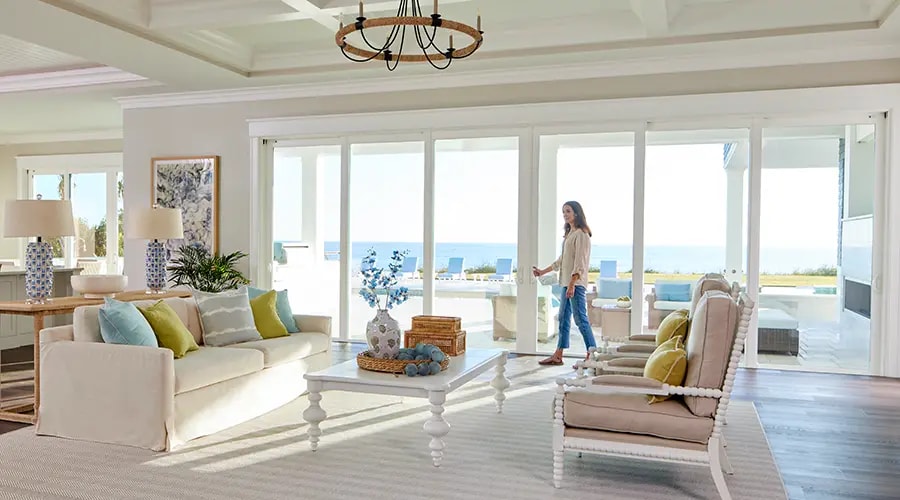
How to Choose Hurricane Impact Patio Doors

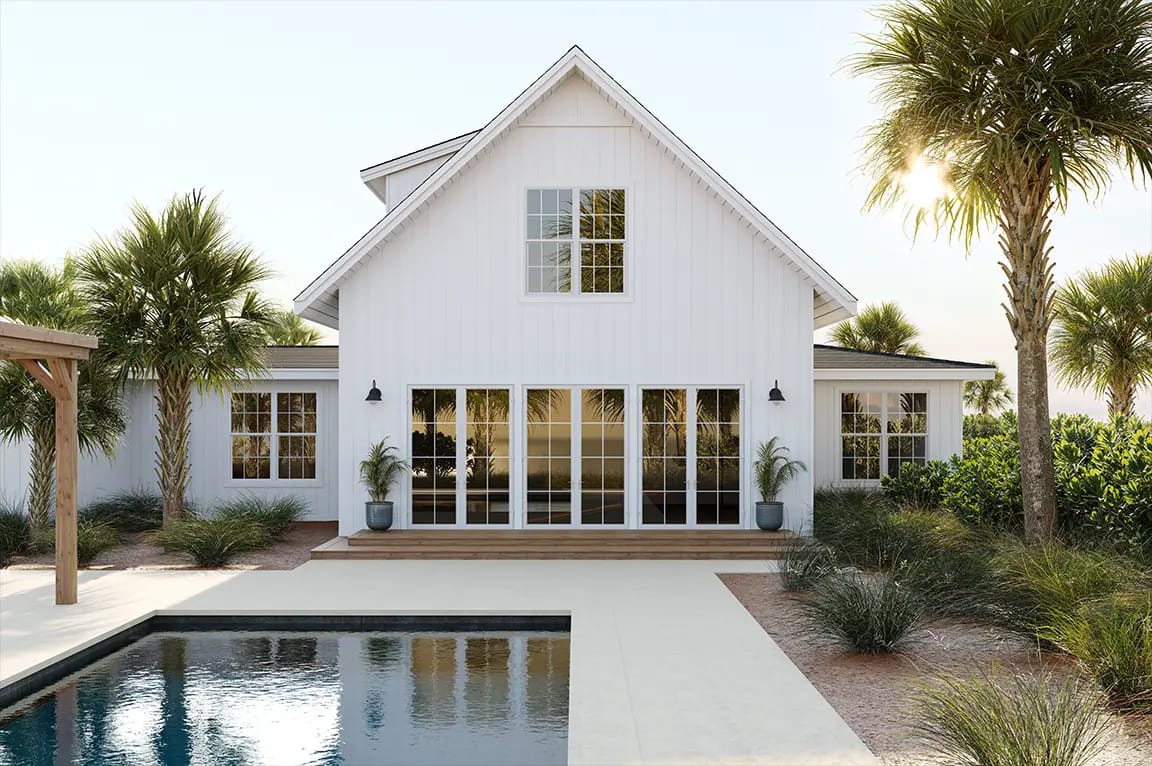
From warm, humid days to stormy nights, living in a coastal community comes with a unique set of weather conditions. Hurricane impact patio doors combine reinforced frames with impact-resistant glass to help protect homes during severe weather without sacrificing everyday usability. Whether you live in Florida's High Velocity Hurricane Zone (HVHZ), on a hurricane-prone coastline or in an area that experiences tropical storms, choosing the right hurricane impact patio doors can help protect your home while preserving the style and functionality of your living space.
Patio doors are often one of the largest openings in a home, making them especially vulnerable during severe weather. Hurricane impact patio doors are engineered to help withstand hurricane-force winds and windborne debris while providing everyday benefits like energy efficiency and noise reduction.
This guide explains what hurricane impact patio doors are, how they work and what to consider when comparing sliding patio doors, French patio doors and multi-slide patio doors. You'll also learn about impact ratings, building code requirements and the testing that helps ensure these doors perform in demanding coastal environments.
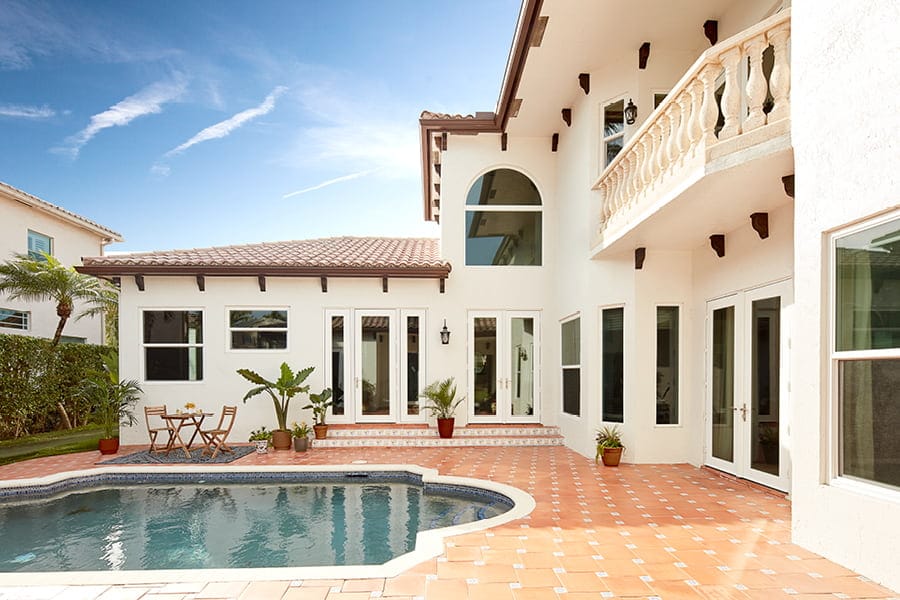
What Are Hurricane Impact Patio Doors?
In the simplest terms, a hurricane impact patio door is a patio door with specialized features designed to help protect your home from damage caused by hurricanes and tropical storms. Built with laminated impact-resistant glass, reinforced frames and heavy-duty locking hardware, these doors are engineered to help remain intact when struck by flying debris and exposed to hurricane-force winds.
Throughout this article, the terms hurricane patio doors, impact patio doors and impact-resistant patio doors are used interchangeably because they describe the same type of product.
Patio doors play an important role in protecting a home's building envelope during severe weather. Because they typically contain large expanses of glass, they are subjected to significant wind pressure during a hurricane. If a patio door fails, wind and rain can enter the home, increasing interior pressure and potentially contributing to more extensive structural damage.
Unlike temporary storm protection products such as shutters or plywood, hurricane impact patio doors don't require additional preparation before a storm. Once the doors are closed and locked, they're ready to help protect your home.
Today's impact-rated patio doors are available in several configurations, making it possible to match your home's architecture while meeting local performance requirements. The three primary patio door styles include:
- Sliding patio doors
- French (hinged) patio doors
- Multi-slide patio doors
Each offers unique design advantages depending on the size of your opening, your home's layout and how you use your indoor and outdoor living spaces. Later in this guide, we'll take a closer look at each patio door type to help you determine which option best fits your home.
How Hurricane Impact Patio Doors Work
Hurricane impact patio doors are designed as complete systems that combine impact-resistant glass, reinforced frames and durable hardware to help withstand hurricane-force winds and flying debris. While each component plays an important role, they work together to help maintain the integrity of the door opening during severe weather.
Laminated Impact-Resistant Glass
Like impact windows, hurricane impact patio doors use laminated glass made by bonding two panes of glass with a durable polymer interlayer. If flying debris strikes the glass, the outer pane may crack, but the interlayer is designed to help hold the broken glass together. This helps reduce the likelihood of wind, rain and debris entering your home during a storm.
For a more detailed explanation of how laminated impact-resistant glass works, visit Pella’s guide to understanding hurricane windows.
Reinforced Frames and Hardware
Because patio doors are significantly larger than most windows, the frame and hardware must also be engineered for demanding conditions. Impact-rated patio doors use reinforced frames along with heavy-duty rollers or hinges designed to support larger glass panels and help the door continue operating under high wind loads.
Most hurricane impact patio doors also feature multi-point locking systems with three to five lock points, rather than the standard single-point lock found on many conventional patio doors. By securing the door at multiple locations along the frame, these systems help maintain a tighter seal and provide additional structural support during severe weather.
Proper installation is equally important. Reinforced anchoring helps keep the patio door securely connected to the surrounding structure, allowing the entire door system to perform as intended.
If a patio door fails during a hurricane, wind can enter the home and dramatically increase internal pressure. This can contribute to more extensive structural damage, which is why protecting large openings like patio doors is an important part of a home's overall storm protection strategy.
By combining laminated glass, reinforced framing, durable hardware and proper installation, hurricane impact patio doors help protect one of the largest and most exposed openings in your home during severe weather.
Hurricane Patio Door Types
Choosing the right hurricane impact patio door is about more than storm protection. Each door style offers unique advantages depending on your home's layout, architectural style and how you use your indoor and outdoor living spaces. Whether you're working with a compact opening or designing a wall of glass that connects your home to the outdoors, impact-rated patio doors are available in configurations to match your needs.
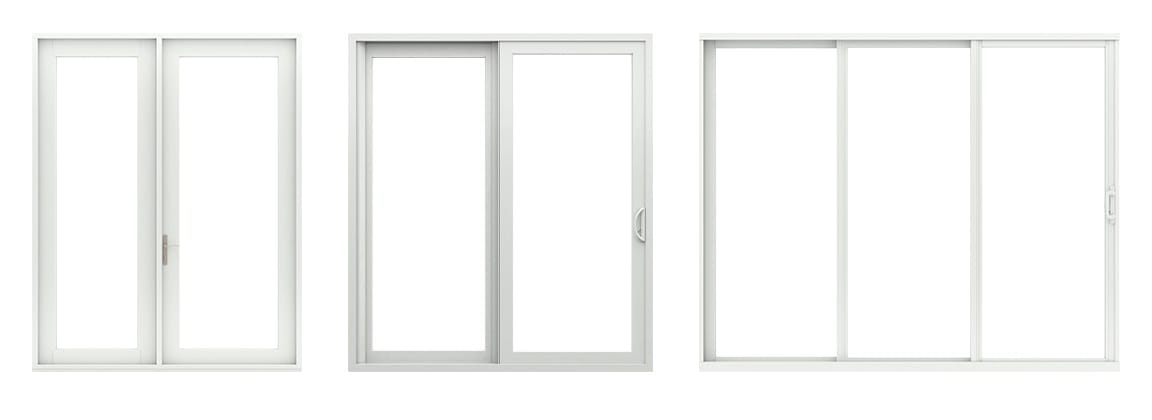
The three most common hurricane impact patio door styles are sliding patio doors, French (hinged) patio doors and multi-slide patio doors.
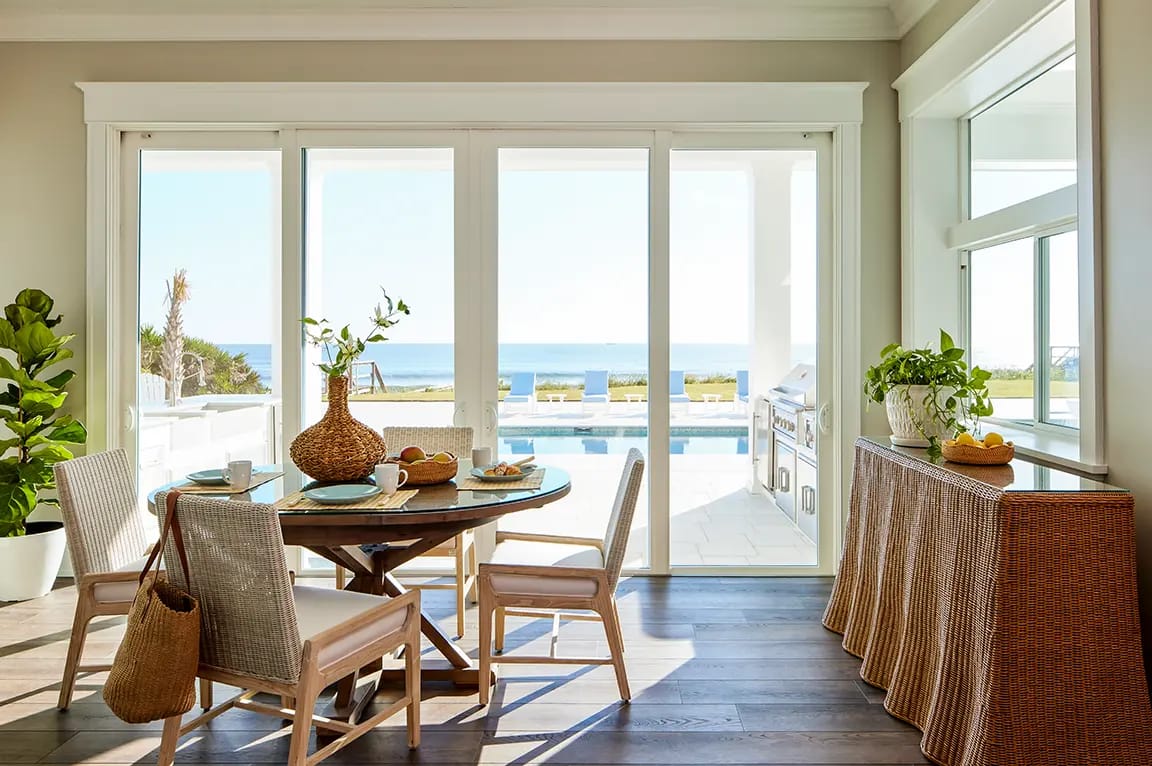
Feature | Hurricane Impact Sliding Patio Doors | Hurricane Impact French Patio Doors | Hurricane Impact Multi-Slide Patio Doors |
|---|---|---|---|
| Opening Size | Standard two-panel or multi-panel openings | Single- or double-door openings | Large openings with three or more panels; can span 12+ feet depending on configuration |
| Floor space needed | Minimal; panels glide along a track | Requires swing clearance for inward or outward operation | Minimal; panels slide and stack without requiring swing clearance |
| Operation | Panels slide horizontally along a track | Hinged doors swing inward or outward | Three or more panels slide and stack or slide behind one another |
| Best-fit home style | Contemporary and transitional homes | Traditional, coastal and craftsman-style homes | Waterfront homes, luxury residences and homes designed for indoor-outdoor living |
Hurricane Impact Sliding Patio Doors
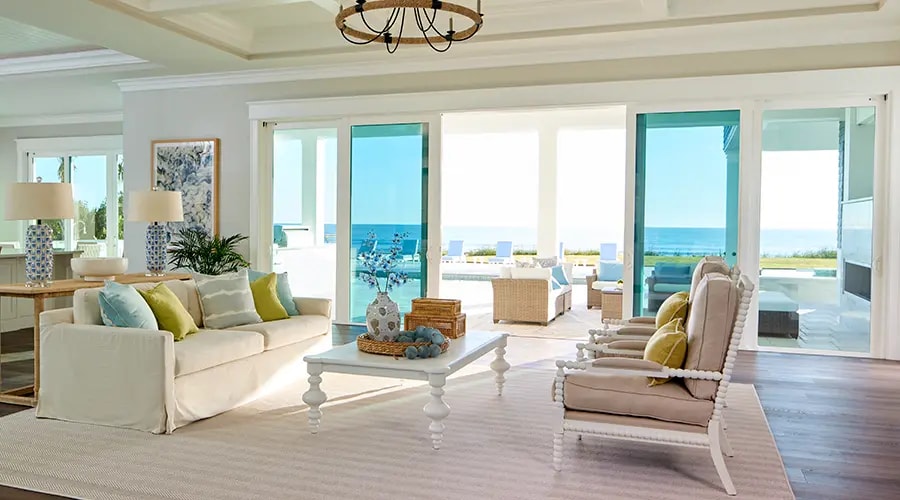
Sliding patio doors are one of the most popular choices for coastal homes because they provide expansive views while requiring very little floor space. Rather than swinging inward or outward, the panels glide horizontally along a track, making them an excellent option for rooms where furniture placement or limited square footage makes a hinged door less practical.
Impact-resistant sliding patio doors are available in two-panel and multi-panel configurations, allowing homeowners to choose the amount of glass and ventilation that best suits their space. Their clean lines also make them a natural fit for contemporary and transitional home designs.
When comparing hurricane impact sliding glass doors, look for features such as laminated impact-resistant glass, reinforced frames, multi-point locking hardware and products that meet the building code requirements for your location.
Pella Hurricane Shield Series sliding patio doors combine these impact-resistant features with a variety of grille patterns, hardware finishes and frame colors, allowing homeowners to balance performance with design flexibility.
Hurricane Impact French Patio Doors
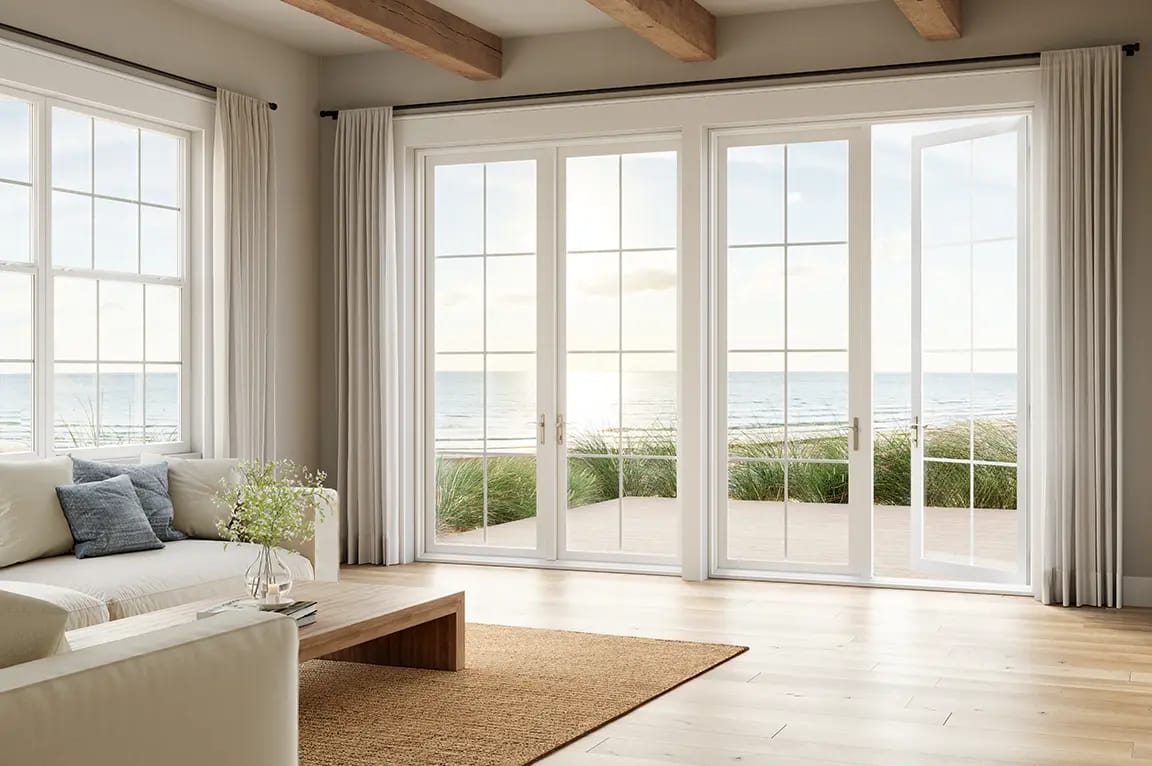
French patio doors—also called hinged patio doors—offer a more traditional appearance while delivering the protection required in hurricane-prone regions. Available in single- and double-door configurations, they can be designed to swing inward or outward depending on your home's layout and local building code requirements.
Many homeowners choose French patio doors because they create a defined architectural focal point while providing a wider entryway than a standard single door. They're often well suited for traditional, coastal and craftsman-style homes.
When selecting hurricane impact French doors, pay close attention to the door's locking system, reinforced frame construction and impact ratings. Because hinged doors rely on compression seals rather than sliding tracks, proper installation and adjustment are essential for long-term performance.
Pella offers impact-resistant hinged patio doors in both the Hurricane Shield Series and Reserve – Traditional product lines, giving homeowners options for both vinyl and wood patio doors depending on their design preferences.

Hurricane Impact Multi-Slide Patio Doors
For homeowners looking to maximize indoor-outdoor living, hurricane impact multi-slide patio doors create expansive openings while maintaining the protection needed in coastal environments.
Unlike traditional sliding patio doors, multi-slide systems use three or more panels that stack or slide behind one another to create significantly larger openings. Depending on the configuration, they can span more than 12 feet, making them a popular choice for waterfront homes, luxury residences and spaces designed for entertaining.
Because these systems contain larger expanses of glass, it's especially important to choose impact-rated products that have been engineered and tested for the wind pressures expected in your region. Features such as reinforced frames, laminated impact-resistant glass and heavy-duty roller systems help the door continue operating under demanding conditions.
Pella Hurricane Shield Series multi-slide patio doors are available in a variety of panel configurations and finish options, making it possible to create wide openings without sacrificing hurricane protection.
As you compare patio door styles, remember that the best choice isn't determined by aesthetics alone. The size of your opening, available floor space, desired operation, local building code requirements and the performance ratings of the door should all factor into your decision.
Hurricane Patio Door Ratings Explained
When shopping for hurricane impact patio doors, you'll likely encounter technical ratings and certifications that aren't immediately familiar. While these ratings may seem complicated, they're designed to help homeowners understand how a patio door has been tested and where it can be installed.
Design Pressure (DP) Ratings
Design Pressure (DP) measures a patio door's ability to resist positive and negative wind pressures without experiencing structural failure. In general, higher DP ratings indicate a door has been tested to withstand greater wind loads, although the rating required depends on your home's location and local building code requirements.
ASTM E1996 Impact Testing
Impact-rated patio doors are also tested for resistance to windborne debris. ASTM E1996 establishes several missile classifications, with Missile Level D commonly used for residential hurricane applications. During testing, products are struck by a large projectile before undergoing additional pressure cycling to evaluate their performance.
Wind Speed Ratings
Many hurricane impact patio doors are also associated with wind speed ratings based on their testing and certification. Depending on the product and installation, impact-rated patio doors may be tested to withstand wind speeds associated with severe hurricanes.
Florida and Texas Certifications
Homeowners in Florida should verify whether products carry the required Florida Product Approval and, where applicable, Miami-Dade Notice of Acceptance (NOA) for High Velocity Hurricane Zone installations. In designated Texas coastal counties, additional Texas Department of Insurance (TDI) evaluations and WPI-8 documentation may also apply.
Energy Performance
In addition to impact ratings, it's worth considering energy performance. U-factor, Solar Heat Gain Coefficient (SHGC) and ENERGY STAR® certification can help homeowners compare how well different patio doors insulate against heat transfer and solar gain in their climate.
Understanding these ratings makes it easier to compare products and determine whether a patio door meets both your local building code requirements and your home's performance goals.
Do I Need Hurricane Impact Patio Doors?
Whether hurricane impact patio doors are required depends on where you live, your local building code and your home's exposure to severe weather.
Homes located in Florida's High Velocity Hurricane Zone (HVHZ), which includes Miami-Dade and Broward counties, are subject to some of the nation's most stringent hurricane building codes. Many other coastal areas throughout Florida fall within Wind-Borne Debris Regions (WBDRs), where impact protection is also required for glazed openings. Texas has similar requirements in designated catastrophe counties for homes seeking Texas Windstorm Insurance Association (TWIA) coverage.
Even if your home isn't located in one of these regions, hurricane impact patio doors may still be worth considering if you experience tropical storms, hurricanes or high-wind events.
You should consider hurricane impact patio doors if you:
- Live in an HVHZ or Wind-Borne Debris Region.
- Own a home along the Atlantic or Gulf Coast.
- Need to meet local building code requirements for new construction or remodeling.
- Want to replace aging patio doors with products designed for severe weather.
- Prefer a permanent solution that doesn't require storm shutters or plywood.
- Want additional everyday benefits such as improved energy efficiency, noise reduction and enhanced security.
When comparing products, verify that the patio door meets the requirements for your location. Look for:
- Applicable Florida Product Approval or Miami-Dade NOA (where required).
- Texas TDI evaluation and WPI-8 documentation, if applicable.
- Appropriate Design Pressure (DP) rating for your wind zone.
- ASTM E1996 impact testing.
- Multi-point locking hardware.
- ENERGY STAR® certification for your climate zone.
- Professional installation.
Cost of Hurricane Impact Patio Doors
Hurricane impact patio doors typically cost more than standard patio doors because they're built with laminated impact-resistant glass, reinforced frames, multi-point locking systems and hardware designed to withstand severe weather. They also undergo extensive testing and certification before installation in hurricane-prone regions.
The overall cost of a project depends on several factors, including:
- Patio door style
- Size of the opening
- Number of panels
- Frame material
- Glass package
- Required impact rating and certifications
- Installation complexity
In general, hurricane impact sliding patio doors are often the most affordable option, while multi-slide patio doors typically represent the highest investment because of their larger openings, additional moving panels and more complex installation requirements. Permit fees should also be factored into the overall project cost, as most jurisdictions require permits and inspections for impact-rated patio door installations. Permit costs vary by municipality and project scope, so homeowners should confirm local requirements before work begins. In areas such as Florida's High Velocity Hurricane Zone (HVHZ), additional product approvals, engineering requirements and inspections may also increase project costs. Overall, the cost of hurricane impact patio doors varies widely depending on the door style, size, materials, installation requirements and local building code requirements.
For more information about replacement project costs, visit Pella's replacement window cost resources.
Insurance and ROI for Hurricane Impact Patio Doors
In addition to protecting your home during severe weather, hurricane impact patio doors may provide financial benefits over time.
When installed as part of a qualifying wind mitigation system, impact-rated patio doors may help homeowners qualify for windstorm insurance discounts, depending on state requirements and their insurance provider. Florida Statute § 627.0629 requires insurers to provide actuarially reasonable discounts, credits or other rate differentials for qualifying windstorm mitigation features, while Texas uses WPI-8 certification to document compliance for certain coastal properties.
Beyond insurance, impact patio doors offer benefits homeowners can appreciate every day. Laminated glass helps reduce outside noise, Low-E glass options improve energy efficiency and impact-resistant glass blocks up to 99.7% of harmful UV rays on Hurricane Shield® products, helping protect flooring, furnishings and artwork from fading.
Because impact patio doors combine hurricane protection with everyday performance, many homeowners view them as a long-term investment rather than simply a storm-preparation product.

How Pella Tests Its Hurricane Impact Patio Doors
Every Pella Hurricane Shield® patio door is subjected to extensive testing designed to evaluate its performance under demanding hurricane conditions.
To evaluate impact resistance, Pella tests door units by firing a 2-by-4 at 50 feet per second, consistent with ASTM E1996 Missile Level D testing. After impact, products undergo 9,000 cycles of positive and negative pressure testing to simulate the changing wind pressures experienced during a hurricane.
Patio doors are also tested for:
- Air infiltration
- Water infiltration
- Structural performance
- Operating performance after impact testing
Depending on the product configuration, Pella Hurricane Shield® patio doors are also available with Florida Product Approvals, Miami-Dade Notices of Acceptance (NOA) and Texas Department of Insurance evaluations where applicable.
Homeowners looking for wood impact-rated patio doors can also explore select Pella Reserve – Traditional hinged patio door configurations designed for hurricane-prone regions.
Thinking about next steps?
Whether you’re exploring ideas or ready to talk details, we’re here to help. Schedule a consultation—or sign up for inspiration and real-home insights from Pella.
Frequently Asked Questions
What are hurricane impact patio doors?
Hurricane impact patio doors are patio doors built with laminated impact-resistant glass, reinforced frames and heavy-duty hardware designed to help protect homes from hurricane-force winds and flying debris.
How much do hurricane impact patio doors cost?
Costs vary based on the door style, size, materials, certifications and installation requirements. Multi-slide patio doors generally cost more than sliding or French patio doors because of their larger openings and additional panels.
Are hurricane impact sliding glass doors better than French doors?
Neither option is inherently better. Sliding patio doors maximize glass area while requiring less floor space, while French patio doors offer a more traditional appearance and defined architectural style. The right choice depends on your home's layout and personal preferences.
Do hurricane impact patio doors qualify for insurance discounts?
They may. Depending on your location and insurance carrier, impact-rated patio doors installed as part of a qualifying wind mitigation system may help reduce windstorm insurance premiums.
What wind speeds can Pella hurricane impact patio doors withstand?
Pella hurricane impact patio doors are tested to meet applicable impact and structural performance standards, including ASTM E1996 Missile Level D testing. Wind speed requirements vary by product configuration and local building code.
Are hurricane impact patio doors required by code?
In many coastal regions, yes. Homes located in Florida's High Velocity Hurricane Zone and many Wind-Borne Debris Regions require impact protection for glazed openings. Certain Texas coastal counties also have windstorm requirements. Building code requirements vary by location.